What safety factors need to be considered in the design of die-cast explosion-proof lamp housings
Explosion-proof lamps are widely used in high-risk industries such as petroleum, chemical, and electric power. Their main function is to avoid explosions caused by sparks, heat, and other factors generated by electrical equipment or lamps. Therefore, the design of explosion-proof lamps must not only ensure the normal operation of their light sources, but also meet strict safety requirements. In particular, the design of explosion-proof lamp housings is critical to safety requirements. As a company specializing in aluminum alloy precision casting, Ningbo Jinyao Machinery Co., Ltd. is well aware of the importance of each link in ensuring the safety performance of lamps.
Explosion-proof performance design
The primary safety requirement for explosion-proof lamp housings is their explosion-proof performance. During the design process, the housing must ensure that when the electrical equipment inside the lamp fails, sparks, heat, and other factors can be prevented from causing explosions in the surrounding environment. Explosion-proof lamp housings must be designed and tested according to international standards. Common explosion-proof levels include Ex d (explosion-proof) and Ex e (enhanced). In order to ensure that this design requirement is met, Ningbo Jinyao Machinery Co., Ltd. uses high-precision mold design and precision casting technology in the die-casting process, which can accurately control every detail of the shell and ensure that the explosion-proof performance meets international safety standards.
Shock and seismic design
Explosion-proof lamps are often used in harsh environments, such as mines and oil platforms, where lamps may be subject to external shock and vibration. Therefore, the shell design must have good shock and seismic resistance. The material, structural design and thickness distribution of the shell all require special consideration.
Ningbo Jinyao Machinery Co., Ltd. uses advanced aluminum alloy materials and combines precision casting technology. Through reasonable structural design and material selection, the explosion-proof lamp shell has sufficient strength and toughness, which can effectively resist external shock and vibration, ensuring that the lamp can still be used normally under extreme conditions.
Corrosion resistance design
Explosion-proof lamps are often used in humid, high salt spray or chemically corrosive environments, such as offshore oil platforms or chemical plants. If the corrosion resistance of the shell is poor, it will not only affect the service life of the lamp, but may also cause damage to the shell and affect safety.
At this point, Ningbo Jinyao Machinery Co., Ltd. pays special attention to the surface treatment technology of the shell, and enhances the corrosion resistance of the shell by adopting advanced surface treatment processes such as anodizing, spraying, and electrophoretic coating. After anodizing, the aluminum alloy shell can form a hard oxide film on the surface, which not only increases its corrosion resistance, but also improves the wear resistance and aesthetics of the shell.
Heat dissipation design
Explosion-proof lamps will generate a certain amount of heat when working. If the heat dissipation is poor, it will not only affect the light effect of the lamp, but may even cause electrical failure or explosion risks due to overheating. Therefore, the shell of explosion-proof lamps needs to have good heat dissipation performance.
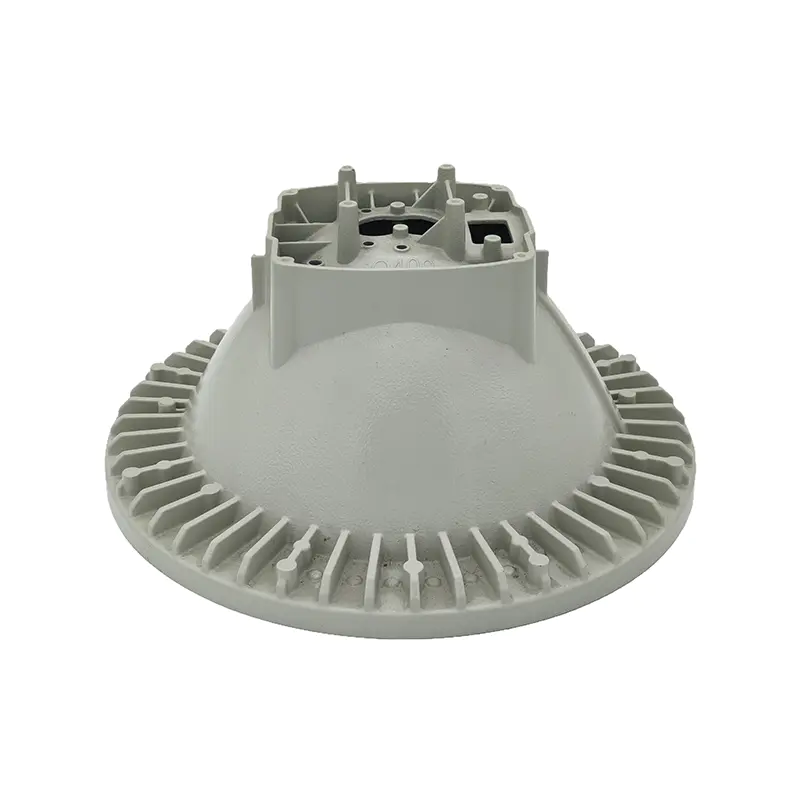
Ningbo Jinyao Machinery Co., Ltd. adopts an optimized heat dissipation structure design when designing the shell of explosion-proof lamps. Through reasonable casting process and appearance design, it ensures that the lamp can effectively dissipate heat. Aluminum alloy materials have excellent thermal conductivity. Combined with scientific shell structure, it can effectively improve the heat dissipation efficiency of lamps and ensure their long-term stable operation.
Waterproof and dustproof design
Explosion-proof lamps are often exposed to dusty and watery environments. Therefore, waterproof and dustproof design is an important part of the lamp housing design. The explosion-proof lamp housing die castings must not only have explosion-proof function, but also meet IP65 or higher waterproof and dustproof requirements.
Jinyao Machinery uses high-precision die-casting technology to ensure the sealing of the housing, and ensures that the waterproof and dustproof performance meets the standards by precisely controlling the seams and joints of the housing. In addition, the company also uses auxiliary designs such as O-rings to enhance the waterproof and dustproof effect of the lamp, ensuring that it can work stably and long-term in harsh environments.
Electromagnetic compatibility design
In some high-precision and sensitive applications, explosion-proof lamps also need to have good electromagnetic compatibility (EMC) to avoid external electromagnetic interference from adversely affecting the normal operation of the lamp, especially in high-voltage environments. Electromagnetic interference may cause abnormal operation of the lamp and even cause safety hazards.
Jinyao Machinery pays attention to the electromagnetic shielding function in the design of the explosion-proof lamp housing. By optimizing the metal material and internal structure of the housing, the electromagnetic shielding performance of the lamp is improved to ensure that the lamp can work normally in a high electromagnetic environment.
Standards and Certifications
The design of explosion-proof lamps must not only comply with domestic and international industry standards, but also pass the corresponding certifications. For example, ATEX and IECEx certifications are important certification standards for explosion-proof lamps in the European and international markets. For explosion-proof lamp housings, ensuring compliance with these strict standards and certification requirements is a key step in the design.
Ningbo Jinyao Machinery Co., Ltd. strictly follows international explosion-proof standards in the production process of explosion-proof lamp housings to design and test them to ensure that each product meets the relevant certification requirements. This not only improves the market competitiveness of the products, but also provides customers with more reliable safety guarantees.
What are the surface treatment methods for die-cast explosion-proof lamp housings?
The design requirements for explosion-proof lamp housing die castings are extremely strict, especially in terms of explosion-proof performance, corrosion resistance, and heat dissipation performance. As Ningbo Jinyao Machinery Co., Ltd., we pay great attention to the surface treatment technology of products when producing aluminum alloy precision die-castings. Surface treatment can not only significantly improve the mechanical properties of the housing, but also enhance its important functions such as corrosion resistance, wear resistance, waterproof and dustproof, ensuring the safety and reliability of lamps in extreme environments.
Anodizing treatment
Anodizing is one of the most commonly used methods for surface treatment of aluminum alloy shells. It significantly improves the corrosion resistance, wear resistance and appearance quality of the material by forming a protective film on the surface of the aluminum alloy. The anodized film can not only effectively prevent the metal from reacting with oxygen and moisture, but also make the shell more resistant to ultraviolet rays and extend its service life.
Jinyao Machinery adopts advanced anodizing technology to ensure the uniformity and durability of the shell surface treatment. The oxide film formed on the surface of the aluminum alloy shell after anodizing treatment not only improves the strength of the explosion-proof lamp shell, but also can be customized in different colors and appearances according to customer needs to meet the dual needs of beauty and function.
Spraying treatment
Spraying treatment is to increase its corrosion resistance and waterproof and dustproof properties by spraying metal coatings or other protective coatings on the surface of the aluminum alloy shell. This treatment method is particularly suitable for some harsh environments, such as offshore oil platforms, chemical plants, etc., and can effectively resist salt spray and chemical corrosion.
In the production process of Jinyao Machinery, we use high-voltage electrostatic spraying technology to spray the explosion-proof lamp shell. This process can not only achieve uniform adhesion of the coating, but also greatly improve the corrosion resistance and friction resistance of the surface. In addition, the thickness, adhesion and smoothness of the spray coating can be finely adjusted according to the special needs of customers to ensure that explosion-proof lamps can still work stably for a long time in high humidity and strong corrosion environments.
Electrophoretic coating
The electrophoretic coating process is an environmentally friendly and efficient coating method. The coating is deposited on the surface of the aluminum alloy through the action of an electric field to form a uniform coating. Electrophoretic coating not only provides higher corrosion resistance, but also improves the oxidation resistance of the aluminum alloy surface and increases the wear resistance of the surface.
Jinyao Machinery uses advanced electrophoretic equipment and processes in the electrophoretic coating treatment of the explosion-proof lamp housing to ensure uniform coating thickness and strong adhesion of the coating. This surface treatment method is particularly suitable for explosion-proof lamps used in environments with strong acid, alkali and salt spray, and can effectively protect the aluminum alloy housing from corrosion during long-term use.
Chemical plating treatment
Chemical plating is a technology that deposits a layer of metals such as nickel and copper on the surface of aluminum alloy through chemical reactions. This treatment method can provide an extremely strong surface protection layer for the explosion-proof lamp housing die castings, significantly improving the corrosion resistance and wear resistance.
Jinyao Machinery uses an automated coating control system in the chemical plating process to ensure that the coating thickness, uniformity and adhesion of each batch can meet international standards. This process not only improves the mechanical properties of the explosion-proof lamp housing, but also improves its electrical properties, especially in some applications that require a higher electromagnetic shielding effect, the protective effect of chemical plating treatment is more prominent.
Electrochemical polishing
Electrochemical polishing is a high-precision surface treatment process that removes tiny surface defects through electrochemical reactions to make the surface of the aluminum alloy housing smoother and flatter. This process can not only improve the appearance quality, but also further improve the corrosion resistance and durability of the aluminum alloy.
In the production of explosion-proof lamp housings at Jinyao Machinery, we use precision electrochemical polishing technology to make the housing surface as bright as new, which can effectively reduce the adhesion of dust and pollutants, and at the same time improve the product's anti-fouling and corrosion resistance. Especially in high-demand visual and use environments, electrochemical polishing can provide more outstanding performance.
High temperature resistant coating
Some explosion-proof lamps used in high temperature environments need to have good high temperature resistance to ensure that the lamp housing does not deform or damage at high temperatures. High temperature resistant coating is an effective way to solve this problem. It coats the aluminum alloy housing with a special high temperature resistant coating to enable it to withstand high temperatures without thermal expansion or loss of strength.
Jinyao Machinery uses a high temperature resistant coating spraying process for the surface treatment of the explosion-proof lamp housing in high temperature environments, which effectively increases the operating temperature range of the lamp, ensuring that it can work stably at higher temperatures to meet the needs of different applications.
Nano coating technology
Nano coating is a new type of surface treatment technology that can provide excellent anti-fouling, anti-corrosion, anti-ultraviolet and other multiple protections by forming a nano-level protective film on the surface of the aluminum alloy housing. Nano coating is extremely durable and environmentally friendly, which can not only improve the safety of the lamp, but also improve its aesthetics.

 Đóng nhào ô tô truyền thống
 Đóng nhào ô tô năng lượng mới
 Giao tiếp nhà ở chết đúc
 Điện bắn xe tay ga điện
 Động cơ xe đạp Động cơ đúc
 Phụ kiện xe máy chết đúc
 Đội ngũ đúc nhà ở động cơ
 Máy đúc kỹ thuật đúc
 Ánh sáng đúc
 Đoạn đúc chết động cơ phía ngoài
 Phụ kiện đồ nội thất chết đúc
 Phụ kiện nướng đúc chết
 Photovoltaic biến tần đúc



 1 Tòa nhà số 1 No.226. Đường Tiantaishan, đường Daqi. Quận Beilun, Thành phố Ningbo, tỉnh Chiết Giang, Trung Quốc
 +86-15967858563

